






May 11: Jeffrey James Higgins is featured on the Fair Observer podcast show — “Why Narcoterrorism Still Matters”

May 11, 2026 — Producer and podcaster Atul Singh explains: In this episode of FO Podcasts, Atul Singh and Jeffrey James Higgins examine how narcoterrorism combines organized crime, insurgency and geopolitical conflict. They discuss the rise of synthetic opioids and how cartels in Latin America increasingly resemble paramilitary organizations capable of challenging state authority. Should narcotics be treated as a public health issue, or an insidious national security threat?
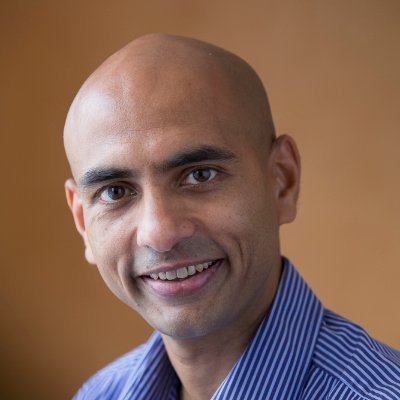
Atul Singh, host, Fair Observer Podcast
In this episode: Editor-in-Chief Atul Singh speaks with former counterterrorism operative Jeffrey James Higgins about narcoterrorism, a threat that sits between organized crime, insurgency and geopolitical conflict. Higgins argues that illicit drug networks are no longer merely criminal enterprises. They fund armed groups, corrupt institutions, hollow out communities and, in some cases, operate like shadow states. As synthetic opioids such as fentanyl spread and cartels acquire paramilitary capabilities, Singh and Higgins examine whether narcotics should be treated as a public health crisis, a law enforcement problem or a national security threat.
Drugs, terror and power: Higgins defines narcoterrorism as “the nexus between terrorism and illicit narcotics trafficking.” He says this connection once met skepticism inside parts of the US intelligence community, but his experience in Afghanistan after 2004 convinced him that the overlap was undeniable. Taliban-linked networks, drug traffickers and armed groups often shared routes, revenue streams and operational interests.
The logic is straightforward. Drugs generate enormous profits, and illegal organizations need money that cannot be raised openly. Afghanistan’s opium economy once supplied much of the world’s heroin, while groups such as the Taliban used narcotics revenue to sustain their political and military ambitions. Today, Higgins argues, fentanyl has transformed the landscape because it is cheaper, more potent and easier to produce than plant-based narcotics.
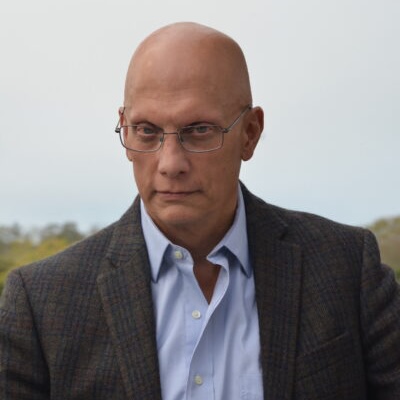
Jeffrey James Higgins
He breaks narcoterrorism into several types: cartels that use political violence to protect drug profits, ideological groups that use drug money to fund their goals, individuals who are both traffickers and terrorists, and broader partnerships between criminal and militant networks. Singh adds that states can also use narcotics as tools of destabilization, citing Pakistan’s alleged role in the Indian state of Punjab and the wider debate over China’s role in the fentanyl trade.
Fentanyl and unrestricted warfare: Much of the conversation turns to China. Higgins argues that Beijing benefits from the flow of fentanyl and related synthetic opioids into the United States, even when it takes limited steps to appear cooperative. In his view, China has the capacity to do far more to stop precursor chemicals and fentanyl analogues from leaving its territory.
Singh complicates the argument by placing it in historical context. He recalls Britain’s 19th-century use of Indian opium against China, which helped inaugurate China’s “century of humiliation.” Higgins accepts the historical parallel but argues that the present danger is part of a broader strategy. He links narcotics to cyberattacks, financial pressure and what he calls disintegration warfare — the effort to weaken a rival from within.
This results in not just overdose deaths, Higgins says, but institutional decay. Narcotics weaken public health, reduce productivity, increase enforcement costs and deepen mistrust in government. Unlike a dramatic terrorist attack, drug-driven destabilization unfolds slowly. This process, in Singh’s words, can “hollow out” entire communities.
Learn more about: Cartels as insurgents • Public health or national security? • Shadow states and justice
Read all about it here • Listen to the episode on Spotify

TONIGHT AT ELAINE’S LITERARY SALON: MONTHLY WRITE-IN WITH JEFFREY JAMES HIGGINS
When: Thursday, October 22, 2026 from 6-9pm
Where: 208 Queen Street, Alexandria, Virginia 22314
Get your free ticket: Oct22WriteIn.eventbrite.com
The Author’s Guild, Mystery Writers of America, and Elaine’s Literary Salon invite you to join fellow authors for our monthly Write-In. Elaine’s owner and bestselling thriller novelist Jeffrey James Higgins is also an Author’s Guild Ambassador. “I am thrilled to host the monthly event that brings together authors from all stages of their writing journey.”
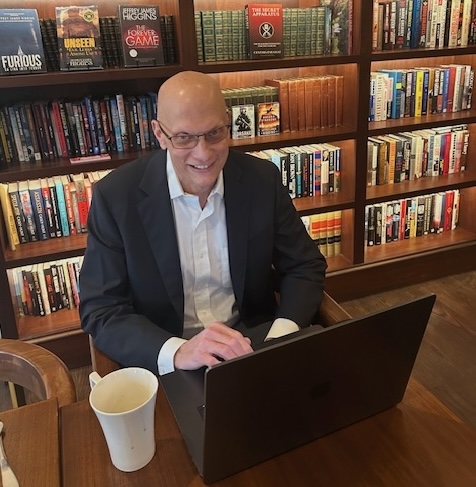
Jeffrey James Higgins writes at least 1,000 words each day on his newest novel
Jeff’s gift to you: Elaine’s is offering authors free coffee or soda to keep you going. Come anytime after 6:00 PM to be sure to hit your word count goals. Don’t write alone!
Agenda:
- 6:00-6:30 PM: Social Time
- 6:30-7:15 PM: 45-Minute Timed Write-In
- 7:15-7:30 PM: 15-Minute break
- 7:30-8:15 PM: 45-Minute Timed Write-In
- 8:15-8:30 PM: Join us for Social Time at the bar
 Alexandria native, author Pete Reilly, pens a love letter to his hometown in his new novel set in the 1970s: “Don’t Drive Left Lane in Alexandria”PeteReilly.eventbrite.comMonday, October 26, 2026In-person live event9pm to midnight
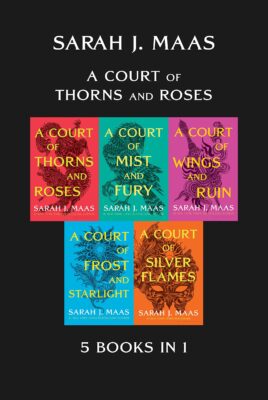 Sold Out: ACOTAR 6 Midnight Release Party — Friends to Lovers bookstoreWednesday, October 28, 2026In-person live event6-9pm
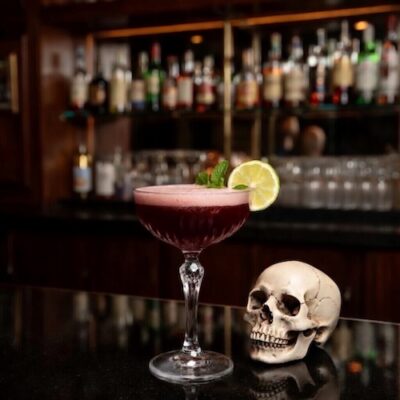 Happy Hour for Writers — the last Wednesday of the month: Join Sisters in Crime Chessie Chapter, the Authors Guild, Mystery Writers of America, Northern Virginia Writer’s Club, Friends to Lovers Bookstore — and more!Thursday, October 29, 2026In-person live event6-9pm
 Save the Date: Join us for a Halloween to celebrate the new Alexandria, VA-based bookstore Long Dark House HalloweenatElaines.eventbrite.comThursday, November 05, 2026In-person live event6-9pm
 Coming in November: Join us for a flight of 5 reds paired with 3 dishes from Elaine’s award-winning menu. Please wear red!Nov5redwinedinner.eventbrite.comSaturday, November 07, 2026In-person live event12-3pm
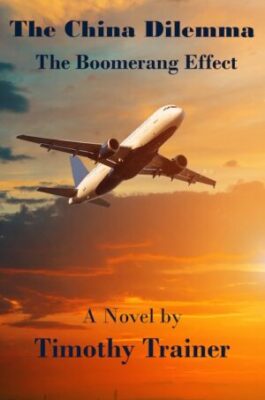 You are going to love book 3 in the series by IP attorney and author Timothy Trainer: “The China Dilemma”Nov7TheChinaDilemma.eventbrite.comSunday, November 08, 2026In-person live event12-3pm
 Quillen deBruney is bringing her lyrical, atmospheric, and deeply personal work to Elaine’s Literary SalonQuillendeBruney.eventbrite.comTuesday, November 10, 2026Coming soon to the Elaine’s Literary Salon show208 Queen Street, Alexandria, Virginia 22314
 Meet Eric Dezenhall, journalist, damage control expert, and author of 12 titles. You’ll be fascinated by his newest non-fiction book, “Wiseguys and The White House”Tuesday, November 10, 2026Coming soon to the Elaine’s Literary Salon show208 Queen Street, Alexandria, Virginia 22314
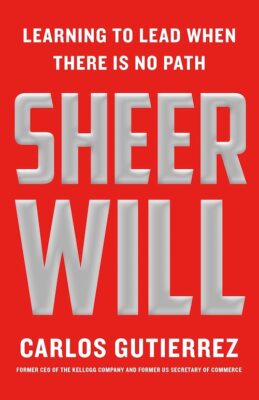 Former Sec. of Commerce Carlos Gutierrez brings us his new book, “Sheer Will: Learning to Lead When There Is No Path”Thursday, November 12, 2026In-person live event6-9pm
 Proud caridura Edna Solís is bringing her interactive book, “The Secret Earth Society,” to Elaine’sEdnaSolis.eventbrite.comSunday, November 15, 2026In-person live event12-3pm
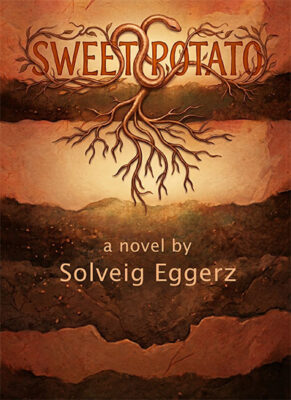 A native of Iceland, storyteller and teacher Solveig Eggerz brings us her latest novel, “Sweet Potato”SweetPotato.eventbrite.comSaturday, November 21, 2026In-person live event12-3pm
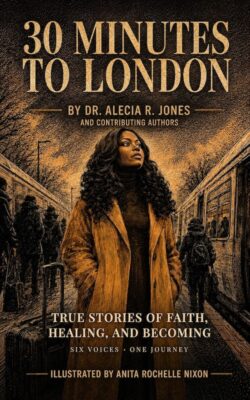 Dr. Alecia R. Jones brings us “30 Minutes to London: True Stories of Faith, Healing, and Becoming”30MinutestoLondon.eventbrite.comTuesday, November 24, 2026Coming soon to the Elaine’s Literary Salon show
 A.D. Metcalfe, VP of the Cape Cod Writers Center and producer for Books and the World, gives us Johnny Alvarez, a precocious young runaway, who knows decay and lawlessness offer camouflage and opportunitySaturday, January 09, 2027In-person live event12-3pm
 Award-winning author Elyse Hoffman strives to tell historical tales with new twists, including her latest title, “The God of Nazi-Land Part I”ElyseHoffman.eventbrite.comSaturday, January 16, 2027In-person live event12-3pm
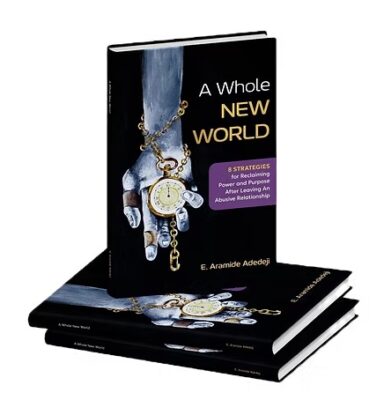 Join us to learn about a powerful debut book by E. Aramide Adedeji, LICSW, LCSW-C, who gives us a practical guide for those recovering from intimate partner violenceAWholeNewWorld.eventbrite.com