






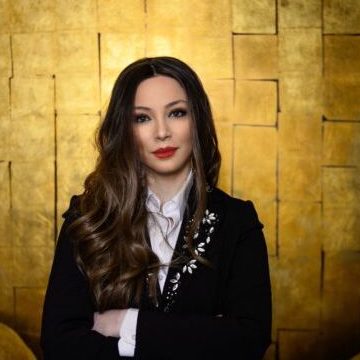
April 8: Cynthia Farahat is featured on the Fair Observer podcast show — “The Muslim Brotherhood Explained — Origins, Ideology and Global Influence”
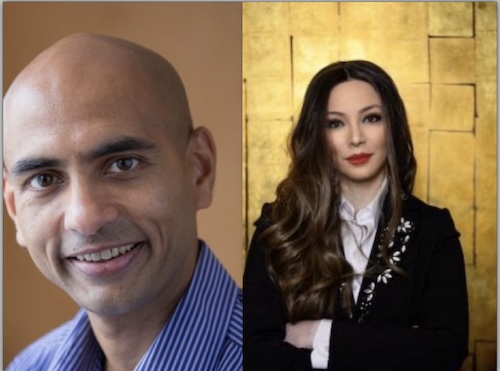
April 8, 2026 — Producer and podcaster Atul Singh explains: In this episode of FO Podcasts, Atul Singh and Cynthia Farahat examine the Muslim Brotherhood’s origins, debating whether it evolved or remained ideologically consistent since 1928. Farahat challenges the distinction between gradualism and militancy, portraying the movement as structurally and ideologically unified across time and geography. They highlight debates about political Islam, governance, and the limits of ideological adaptation.
Editor-in-Chief Atul Singh and Cynthia Farahat, an Egyptian author and political activist, discuss the origins, ideology and evolution of the Muslim Brotherhood. Their discussion traces the movement from its founding in 1928 to its global reach today, while probing a central question: Is the Brotherhood a political organization that adapted over time, or a movement whose core ideology has remained constant? Singh tests widely held academic interpretations while Farahat offers a sharply critical reading that challenges distinctions between moderation and militancy within political Islam.
Origins and ideological foundations: Singh begins by explaining the Muslim Brotherhood’s historic context. Founded in 1928 by Egyptian schoolteacher Hassan al-Banna, the organization emerged during an era of imperial competition and political upheaval across the Middle East. Farahat argues that its roots extend further back, linking its formation to late 19th-century geopolitical strategies that sought to mobilize religious identity for political ends. She cites a German memorandum from 1882 that declared, “We will unleash Muslim fanaticism that borders on insanity.”
For Farahat, the Brotherhood is not simply a reformist or revivalist movement but a synthesis of ideological, political and militant strands aimed at establishing an Islamic caliphate. Singh introduces the conventional distinction between al-Banna’s gradualism and later radical thinkers such as Sayyid Qutb, often seen as the intellectual architect of modern Islamist militancy. Farahat rejects this divide, arguing that Qutb did not transform the Brotherhood’s ideology but rather systematized it. In her view, the movement’s foundational texts already contain the elements later associated with militancy.
Structure, strategy, and global expansion: Singh and Farahat then turn to how the Brotherhood organized itself and expanded beyond Egypt. Farahat emphasizes the creation of the “Secret Apparatus,” an early paramilitary wing that she describes as central to the movement’s structure. She portrays the organization as combining hierarchical discipline with ideological cohesion, enabling it to operate across national boundaries.
Singh probes the extent to which the Brotherhood influenced or intersected with other Islamist movements. Farahat argues that many modern Sunni militant groups emerged from or were shaped by Brotherhood networks, pointing to historical overlaps in membership and ideology. This claim remains contested in broader scholarship, however.
Farahat also highlights the role of thinkers such as Syed Abul A’la Maududi, the South Asian Islamist intellectual who reframed Islamic political concepts in modern terms. She suggests that Maududi’s reinterpretation of governance and sovereignty helped make Islamist ideas more accessible, providing a vocabulary that later figures, including Qutb, could build upon.
Click here to read more! And be sure to listen to the interview on Spotify.

TONIGHT AT ELAINE’S LITERARY SALON: MONTHLY WRITE-IN WITH JEFFREY JAMES HIGGINS
When: Thursday, October 22, 2026 from 6-9pm
Where: 208 Queen Street, Alexandria, Virginia 22314
Get your free ticket: Oct22WriteIn.eventbrite.com
The Author’s Guild, Mystery Writers of America, and Elaine’s Literary Salon invite you to join fellow authors for our monthly Write-In. Elaine’s owner and bestselling thriller novelist Jeffrey James Higgins is also an Author’s Guild Ambassador. “I am thrilled to host the monthly event that brings together authors from all stages of their writing journey.”
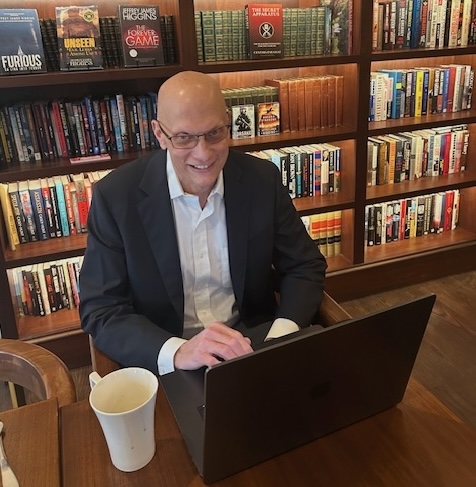
Jeffrey James Higgins writes at least 1,000 words each day on his newest novel
Jeff’s gift to you: Elaine’s is offering authors free coffee or soda to keep you going. Come anytime after 6:00 PM to be sure to hit your word count goals. Don’t write alone!
Agenda:
- 6:00-6:30 PM: Social Time
- 6:30-7:15 PM: 45-Minute Timed Write-In
- 7:15-7:30 PM: 15-Minute break
- 7:30-8:15 PM: 45-Minute Timed Write-In
- 8:15-8:30 PM: Join us for Social Time at the bar
 Alexandria native, author Pete Reilly, pens a love letter to his hometown in his new novel set in the 1970s: “Don’t Drive Left Lane in Alexandria”PeteReilly.eventbrite.comMonday, October 26, 2026In-person live event9pm to midnight
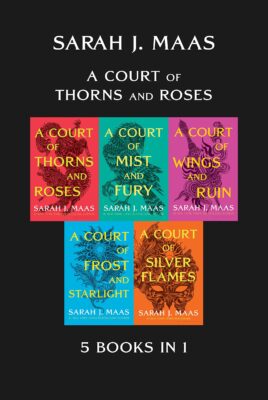 Sold Out: ACOTAR 6 Midnight Release Party — Friends to Lovers bookstoreWednesday, October 28, 2026In-person live event6-9pm
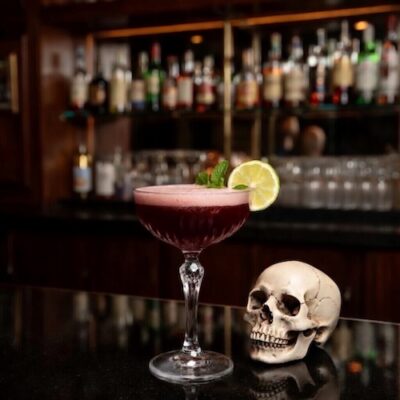 Happy Hour for Writers — the last Wednesday of the month: Join Sisters in Crime Chessie Chapter, the Authors Guild, Mystery Writers of America, Northern Virginia Writer’s Club, Friends to Lovers Bookstore — and more!Thursday, October 29, 2026In-person live event6-9pm
 Save the Date: Join us for a Halloween to celebrate the new Alexandria, VA-based bookstore Long Dark House HalloweenatElaines.eventbrite.comThursday, November 05, 2026In-person live event6-9pm
 Coming in November: Join us for a flight of 5 reds paired with 3 dishes from Elaine’s award-winning menu. Please wear red!Nov5redwinedinner.eventbrite.comSaturday, November 07, 2026In-person live event12-3pm
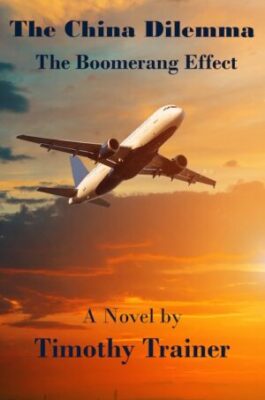 You are going to love book 3 in the series by IP attorney and author Timothy Trainer: “The China Dilemma”Nov7TheChinaDilemma.eventbrite.comSunday, November 08, 2026In-person live event12-3pm
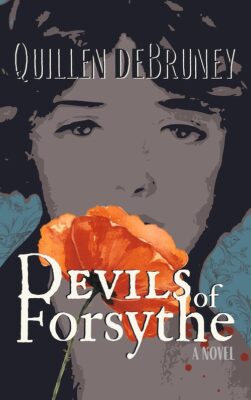 Quillen deBruney is bringing her lyrical, atmospheric, and deeply personal work to Elaine’s Literary SalonQuillendeBruney.eventbrite.comTuesday, November 10, 2026Coming soon to the Elaine’s Literary Salon show208 Queen Street, Alexandria, Virginia 22314
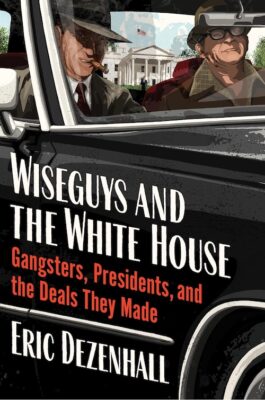 Meet Eric Dezenhall, journalist, damage control expert, and author of 12 titles. You’ll be fascinated by his newest non-fiction book, “Wiseguys and The White House”Tuesday, November 10, 2026Coming soon to the Elaine’s Literary Salon show208 Queen Street, Alexandria, Virginia 22314
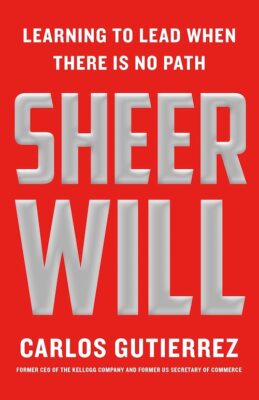 Former Sec. of Commerce Carlos Gutierrez brings us his new book, “Sheer Will: Learning to Lead When There Is No Path”Thursday, November 12, 2026In-person live event6-9pm
 Proud caridura Edna Solís is bringing her interactive book, “The Secret Earth Society,” to Elaine’sEdnaSolis.eventbrite.comSunday, November 15, 2026In-person live event12-3pm
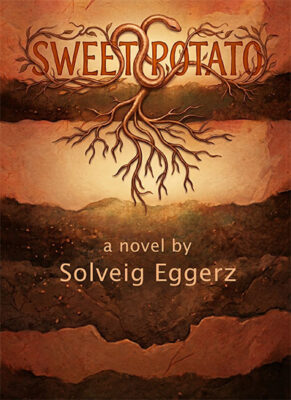 A native of Iceland, storyteller and teacher Solveig Eggerz brings us her latest novel, “Sweet Potato”SweetPotato.eventbrite.comSaturday, November 21, 2026In-person live event12-3pm
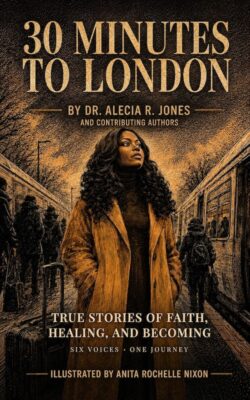 Dr. Alecia R. Jones brings us “30 Minutes to London: True Stories of Faith, Healing, and Becoming”30MinutestoLondon.eventbrite.comTuesday, November 24, 2026Coming soon to the Elaine’s Literary Salon show
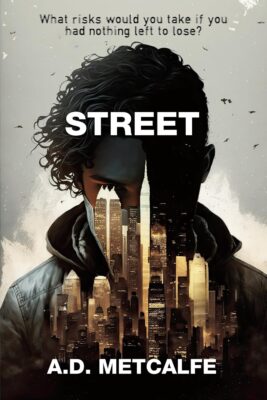 A.D. Metcalfe, VP of the Cape Cod Writers Center and producer for Books and the World, gives us Johnny Alvarez, a precocious young runaway, who knows decay and lawlessness offer camouflage and opportunitySaturday, January 09, 2027In-person live event12-3pm
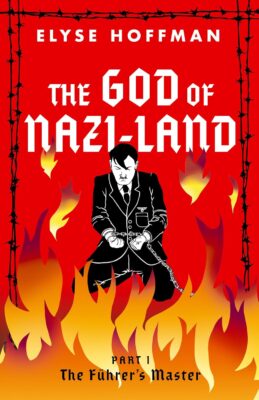 Award-winning author Elyse Hoffman strives to tell historical tales with new twists, including her latest title, “The God of Nazi-Land Part I”ElyseHoffman.eventbrite.comSaturday, January 16, 2027In-person live event12-3pm
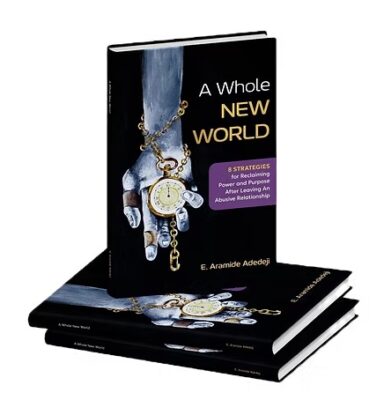 Join us to learn about a powerful debut book by E. Aramide Adedeji, LICSW, LCSW-C, who gives us a practical guide for those recovering from intimate partner violenceAWholeNewWorld.eventbrite.com