






What James Patterson Taught Him About Writing
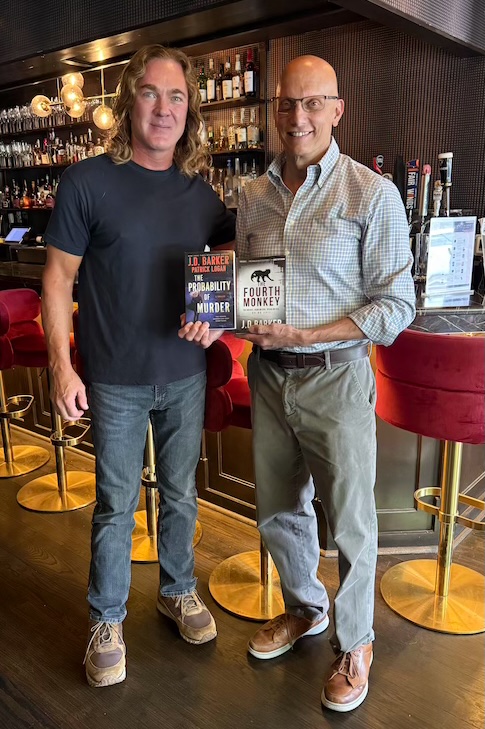
Barker said working with James Patterson changed the way he writes. Their first collaboration, The Coast-to-Coast Murders, taught him the value of stripping a scene down to what readers actually need.
Barker recalled writing about 1,200 words for a dinner scene because several characters needed to be together. Patterson suggested that the scene could simply say they had dinner, followed by the essential dialogue.
Barker realized the lesson went beyond one scene. Writers may need to see an entire interaction play out on the page before they can identify what matters. During revision, however, they must be willing to remove everything that does not serve the story.
That same approach extends to the ends of chapters. Barker said he often removes the final sentence or paragraph to eliminate a sense of closure and create a mini-cliffhanger.
His beta readers receive another unusual assignment. Barker asks them to mark where they decide it is safe to put the book down. If several readers stop at the same point, he rewrites that section so the story gives them a reason to continue.
From Discovery Writing to Dynamic Outlining
Barker also described how his writing process evolved from discovery writing, or “pantsing,” to dynamic outlining.
When he and Patterson wrote The Coast-to-Coast Murders, they initially did not know where the story would end. The finished manuscript reached roughly 170,000 words before they cut it to approximately 110,000-120,000 words.
Patterson then challenged Barker to try outlining. Barker said the difference was significant. Instead of spending his mental energy wondering what happens next, he could concentrate on making the next scene stronger.
However, Barker does not treat an outline as a rigid roadmap. When a new idea emerges, he runs it through the entire outline and adjusts the story accordingly.
That flexibility, he said, prevents writers from spending weeks pursuing an idea that ultimately does not work and then having to discard thousands of words.
The Discipline Behind the Books
Even while traveling, Barker writes every day. He compares writing to going to the gym: exercise the “writer muscle” consistently, and it becomes stronger.
 His unusual secret weapon is a thunderstorm soundtrack. Barker began using it while working long hours in the corporate world and discovered that the sound became a cue that immediately put his brain into writing mode.
Today, the same soundtrack works whether he is writing at home, in a hotel, at an airport, or on a plane.
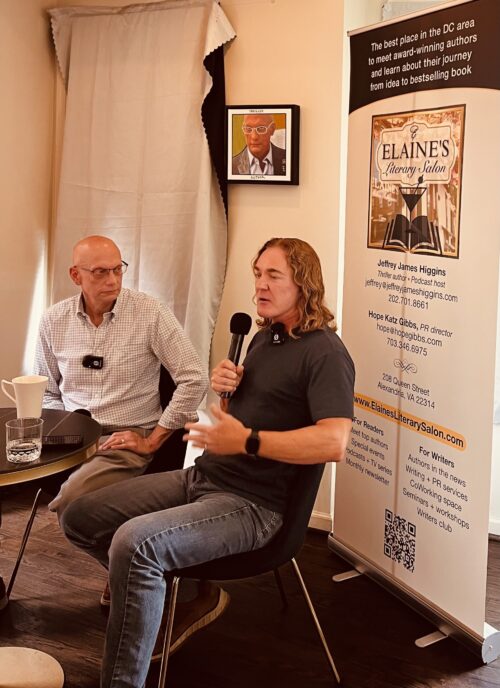
Ultimately, Barker’s message to writers at Elaine’s Literary Salon was both simple and demanding: “develop the instinct to tell a great story, learn to edit ruthlessly, remain flexible, and keep writing.”
The tools may change, but the storyteller remains at the center of the craft.