







After attending Katherine Schweit’s Author Event, Elaine’s Writers Club member Melody Kramer penned an essay, “Who cares why? We keep asking the wrong questions about school shootings” • Check it out
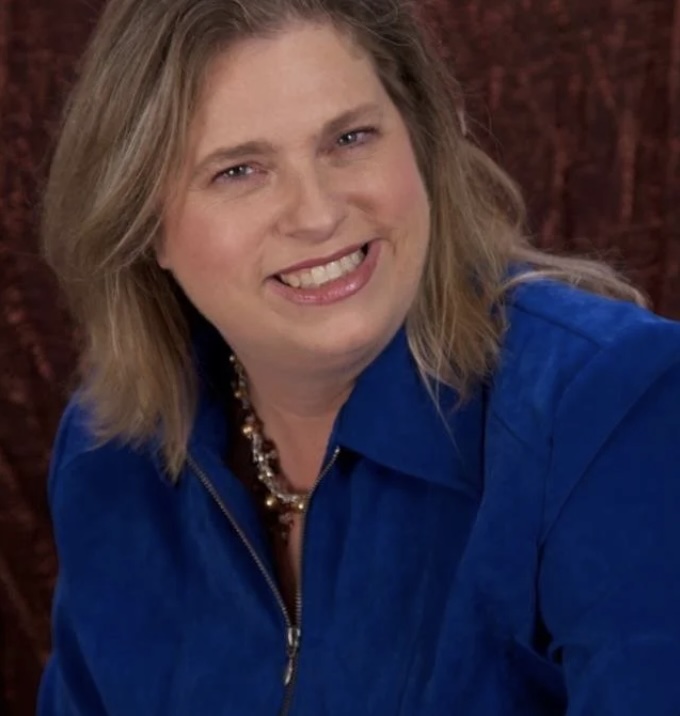
October 16, 2026 — In her Reclaiming Patriotism post today on Substack, Elaine’s Writers Club member Melody Kramer was inspired by the Elaine’s Literary Salon Author event she attended the evening before, featuring Katherine Schweit. An FBI Special Agent executive, a prosecutor, and a journalist, Katherine is one of the country’s foremost experts on mass shootings. Her books include Stop the Killing: How to End the Mass Shooting Crisis and A Simple Guide to the Second Amendment.
Moments before the event began, Katherine received a text that there was a shooting at an elementary school in Bend, Oregon, that afternoon, and she was needed for a comment on the BBC, ABC News, Fox News, and other broadcast networks.
The consummate professional, Katherine took the time for our interview before finding a quiet spot at Elaine’s where she contributed to the BBC report.
Melody, also an attorney and author, was in the audience that evening. The experience inspired her to pen the essay that is posted below. Learn more about her at melodyannkramer.com and be sure to follow her on Substack.
 From Substack: Reclaiming Patriotism, by Melody Kramer
Who cares why? We keep asking the wrong questions about school shootings
Yesterday afternoon started with anticipation of a fun evening at Elaine’s Literary Salon in Alexandria, VA, a frequent hangout for me and for hundreds of authors who have launched books, been interviewed for the podcast, or just enjoyed their amazing food.
Last night the guest for the evening was my friend, Katherine (“Kate”) Schweit, former FBI agent and national expert on mass shootings. She has published three books already – “How to Talk About Guns With Anyone,” “Stop the Killing: How to End the Mass Shooting Crisis,” and “Women Who Talk to the Dead.”
I expected a great interview and Q&A and meeting some cool people.
In an ironic twist of fate, however, while I was driving there, some 16-year-old was shooting up an elementary school in Bend, Oregon. As of the last time I checked, those actions lead to five dead people, including the 16-year-old, and two more gravely injured and fighting for their lives.
Dead and injured children. Again.
Dead and injured adults. Again.
A whole community and country torn apart with grief, yet pulling together in tragedy.
Will this cycle ever stop?
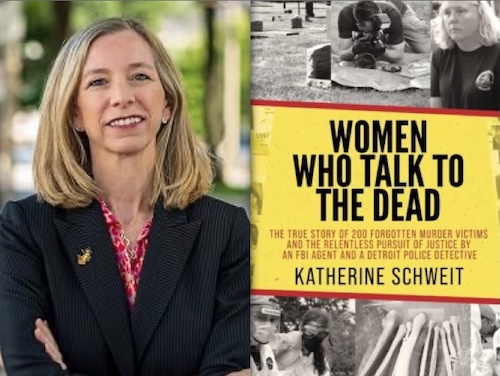 Kate’s phone began blowing up with news media requests to comment on the Oregon shooting. She is a premier national expert, after all. Most urgently, the BBC wanted her to appear live at 8pm, right at the end of the podcast recording.
During the podcast she was asked about the question of motivation of mass killers and she pointed out, as it discussed in much more detail in her “Stop the Killing” book, that looking for motivation is not a helpful exercise because they are so varied. There are precursors to violence, things we should all know about and learn to recognize in our friends, family, and coworkers, but analyzing motivation isn’t one of them. What may be “motivation to kill” for one person is usually not the same for the next.
And yet, when the BBC did their story on the Oregon shooting, they, so predictably, talked about not yet knowing the shooter’s motivation, as if that were a crucial piece of information to have.
I don’t care what motivated the shooter.
That doesn’t help anyone.
The parents of dead children don’t care if the shooter was a psychopath or somebody who was pissed off that there was no milk for his Cherrios that morning.
Their pain is not lessened.
So who cares why?
I have a theory. We crave an answer to the question “why?” Why do these shootings keep happening? Why has this become commonplace? (And believe me, it feels very commonplace to me right now. Several weeks ago there was a workplace shooting in the town where I live. Just a few miles away. I drive past that business all the time. Two dead, one injured. Barely made a blip in the news because it wasn’t children, but that is small comfort.)
We crave an answer to the question “why?” because to understand seems to our brains to equal control. If only I could understand then I could make sure I won’t be a victim, or my children, or others I care about.
Unfortunately, there are plenty of people out there who are quick to offer opinions as to why, and too often we accept those at face value. If only we got rid of all the guns, these shootings wouldn’t happen. Perhaps. If only we got rid of violent TV and video games, these shootings wouldn’t happen. Hard to make that argument when the current administration was planning to livestreaming an execution. If only we still had prayer in public schools. Well how do you explain churches getting shot up? They weren’t lacking in prayers.
Our country is different in a myriad of ways from just a few decades ago when mass shootings didn’t feel like such a common occurrence. There was no one change and there is not just one magic solution to reduce gun violence, but few people seem to want to do the homework, to analyze the data, to better understand a complex problem, and based on all that, to propose and implement real and varied solutions that actually may work.
If we want to know why, with the goal of using that information to foster change (and feel more in control of our safety), we need to step up and ask the right questions of the right people.
Law enforcement experts, such as Kate and many others, have the on the ground experience to provide accurate data to counter the myths regarding commonalities between shooters and what we all should look for as warning signs. That is a great start, and there’s more.
We should also, armed with actual knowledge, ask some questions of ourselves and our family and friends. What are the risk factors for you or them deciding to commit gun violence? Yes, that includes you. Just as we have created a culture of taking keys from our friends who are too drunk to drive, perhaps we can have a corollary of safekeeping guns from our friends or family who are showing signs of stress or concern. Asking the government to intervene at this level and take away guns is problematic for many reasons, problems that mostly evaporate when it’s not the government intervening.
Then we need to talk about the gun culture in which Americans swim everyday. For good or bad, depending on your point of view, there are more guns in this country than people. Politicians are awash in gun lobby money. We need to talk about this.
We also need to have a fundamental rethink and lots of conversations about what we want our country to look like. Should our children, and the populace at large, be safe? From what risks? And what are we doing to ensure that? Where should we draw the lines between personal freedoms and safety risks?
I recently published a heartwrenching essay by a young woman who has grown up with threats of school violence. A couple lines have remained seared in my brain.
Every morning instead of pledging to America I say a little prayer that I won’t become another statistic.
Awareness doesn’t do anything if you don’t take action.
I couldn’t agree more. You can read the whole post here.
These are not one-and-done conversations. It should be discussed at the dinner table, and the corner pub, in school classrooms, and around the “water cooler” at work (whatever the current version of those gatherings are for your workplace).
This time, instead of just thoughts and prayers for the children and adults in Bend, Oregon, let’s commit time to actually asking the right questions, getting available facts from reliable sources, and discuss with our fellow citizens in the context of finding real solutions.
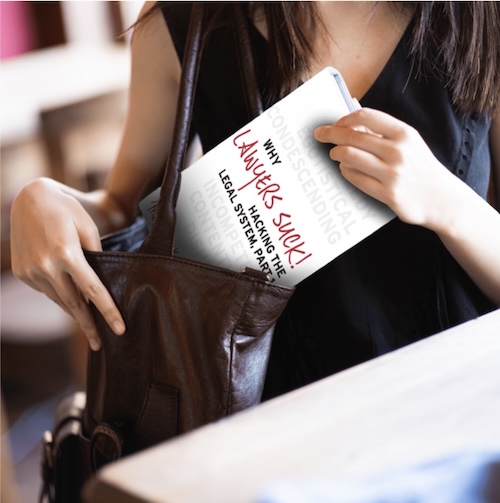 Melody A. Kramer is an award-winning and Amazon bestseller author, trial lawyer, speaker, and innovator in the legal profession.
Melody’s inaugural book “Why Lawyers Suck! Hacking the Legal System, Part 1” is an expose on the real life of lawyers, how they are taught, the pressure-filled environment in which they work, and why they appear to their clients and colleagues to, well, suck. She is now working on the follow-up book “Managing Mercenaries: How to Hire, Fire, and Work with Your Lawyer.” She has also published a Dr. Seuss parody explaining cannabis law, “Green Leaves and Brownies.”
Melody graduated from the University of Nebraska, College of Law (Order of Barristers) in 1993 and began her legal career in Lincoln, Nebraska handling criminal, juvenile, and civil cases, and also served as a Special Prosecutor for Crimes Against Children. She later moved to California and turned her focus to complex business litigation. She currently lives in San Diego with her daughter (also a writer) and two rambunctious kitties who love to chew on her manuscripts.
Ms. Kramer has been nominated for Connected Women of Influence’s “Woman of Influence Award” in 2016 and 2019, been published in The Well News and other magazines, and featured on Caravan to Midnight with John B. Wells, SGTReport with Sean Turnbull, Amazing Authors & Brilliant Books, She Means Business, Thrive LOUD with Lou Diamond, and other internet radio shows.
Learn more: melodyannkramer.com

TONIGHT AT ELAINE’S LITERARY SALON: MONTHLY WRITE-IN WITH JEFFREY JAMES HIGGINS
When: Thursday, October 22, 2026 from 6-9pm
Where: 208 Queen Street, Alexandria, Virginia 22314
Get your free ticket: Oct22WriteIn.eventbrite.com
The Author’s Guild, Mystery Writers of America, and Elaine’s Literary Salon invite you to join fellow authors for our monthly Write-In. Elaine’s owner and bestselling thriller novelist Jeffrey James Higgins is also an Author’s Guild Ambassador. “I am thrilled to host the monthly event that brings together authors from all stages of their writing journey.”
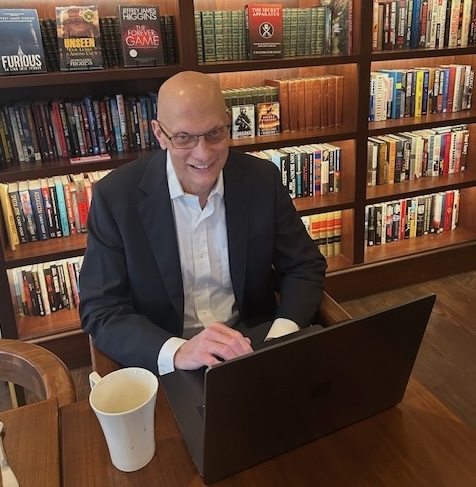
Jeffrey James Higgins writes at least 1,000 words each day on his newest novel
Jeff’s gift to you: Elaine’s is offering authors free coffee or soda to keep you going. Come anytime after 6:00 PM to be sure to hit your word count goals. Don’t write alone!
Agenda:
- 6:00-6:30 PM: Social Time
- 6:30-7:15 PM: 45-Minute Timed Write-In
- 7:15-7:30 PM: 15-Minute break
- 7:30-8:15 PM: 45-Minute Timed Write-In
- 8:15-8:30 PM: Join us for Social Time at the bar
 Alexandria native, author Pete Reilly, pens a love letter to his hometown in his new novel set in the 1970s: “Don’t Drive Left Lane in Alexandria”PeteReilly.eventbrite.comMonday, October 26, 2026In-person live event9pm to midnight
 Sold Out: ACOTAR 6 Midnight Release Party — Friends to Lovers bookstoreWednesday, October 28, 2026In-person live event6-9pm
 Happy Hour for Writers — the last Wednesday of the month: Join Sisters in Crime Chessie Chapter, the Authors Guild, Mystery Writers of America, Northern Virginia Writer’s Club, Friends to Lovers Bookstore — and more!Thursday, October 29, 2026In-person live event6-9pm
 Save the Date: Join us for a Halloween to celebrate the new Alexandria, VA-based bookstore Long Dark House HalloweenatElaines.eventbrite.comThursday, November 05, 2026In-person live event6-9pm
 Coming in November: Join us for a flight of 5 reds paired with 3 dishes from Elaine’s award-winning menu. Please wear red!Nov5redwinedinner.eventbrite.comSaturday, November 07, 2026In-person live event12-3pm
 You are going to love book 3 in the series by IP attorney and author Timothy Trainer: “The China Dilemma”Nov7TheChinaDilemma.eventbrite.comSunday, November 08, 2026In-person live event12-3pm
 Quillen deBruney is bringing her lyrical, atmospheric, and deeply personal work to Elaine’s Literary SalonQuillendeBruney.eventbrite.comTuesday, November 10, 2026Coming soon to the Elaine’s Literary Salon show208 Queen Street, Alexandria, Virginia 22314
 Meet Eric Dezenhall, journalist, damage control expert, and author of 12 titles. You’ll be fascinated by his newest non-fiction book, “Wiseguys and The White House”Tuesday, November 10, 2026Coming soon to the Elaine’s Literary Salon show208 Queen Street, Alexandria, Virginia 22314
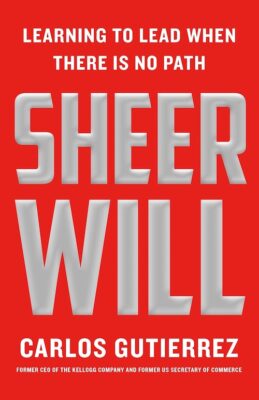 Former Sec. of Commerce Carlos Gutierrez brings us his new book, “Sheer Will: Learning to Lead When There Is No Path”Thursday, November 12, 2026In-person live event6-9pm
 Proud caridura Edna Solís is bringing her interactive book, “The Secret Earth Society,” to Elaine’sEdnaSolis.eventbrite.comSunday, November 15, 2026In-person live event12-3pm
 A native of Iceland, storyteller and teacher Solveig Eggerz brings us her latest novel, “Sweet Potato”SweetPotato.eventbrite.comSaturday, November 21, 2026In-person live event12-3pm
 Dr. Alecia R. Jones brings us “30 Minutes to London: True Stories of Faith, Healing, and Becoming”30MinutestoLondon.eventbrite.comTuesday, November 24, 2026Coming soon to the Elaine’s Literary Salon show
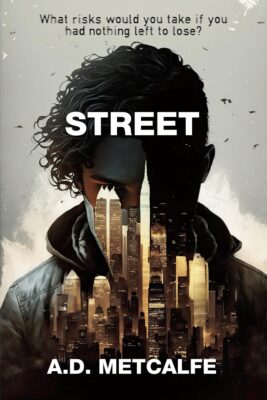 A.D. Metcalfe, VP of the Cape Cod Writers Center and producer for Books and the World, gives us Johnny Alvarez, a precocious young runaway, who knows decay and lawlessness offer camouflage and opportunitySaturday, January 09, 2027In-person live event12-3pm
 Award-winning author Elyse Hoffman strives to tell historical tales with new twists, including her latest title, “The God of Nazi-Land Part I”ElyseHoffman.eventbrite.comSaturday, January 16, 2027In-person live event12-3pm
 Join us to learn about a powerful debut book by E. Aramide Adedeji, LICSW, LCSW-C, who gives us a practical guide for those recovering from intimate partner violenceAWholeNewWorld.eventbrite.com